Crypto: A Warning for Holders on Custody, Regulation and Real Risk
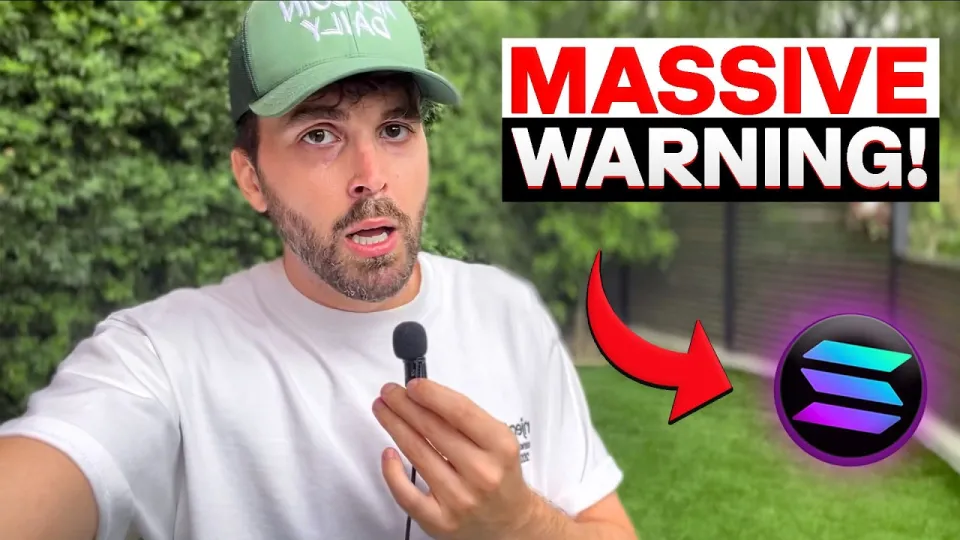
Video: My MASSIVE Warning To Crypto Holders
Want articles like this for your own video to promote it on YouTube and Google? Order them through the Telegram bot @sat_sit_bot. It writes articles around your video, embeds the video and publishes them on popular niche websites (no ads). Free trial — 50 articles.
· based on the channel Altcoin Daily
The core warning for crypto holders is that the largest risks sit outside the price chart: exchange custody, regulatory changes and portfolio concentration. Price volatility is visible and priced in, while counterparty failure, account restrictions and forced selling usually arrive without warning. A practical response is to move long-term holdings into self-custody, spread exposure across assets and platforms, and treat any promotional bonus — such as the WEEX $500 deposit bonus — as a separate decision from where the bulk of a portfolio lives.
What the crypto warning for holders actually covers
The warning is aimed at people who already own coins, not at newcomers deciding whether to buy. The emphasis is on the gap between owning an asset and controlling it: a balance shown in an app is a claim on a platform, while a balance in a wallet is an asset under the holder's own keys. That distinction matters most during stress — outages, withdrawal pauses, insolvencies or sudden regional restrictions — because those are exactly the moments when users want to move funds and cannot.
A second thread is regulation. The direction of travel in major markets has moved from blanket hostility toward licensing and disclosure rules, which changes the practical question from "will crypto be banned" to "which venues and tokens remain accessible in my jurisdiction." For holders, that means the compliance profile of a platform is now part of its risk assessment, alongside fees and liquidity. The video frames this as a warning rather than a prediction, and the framing is useful: it is a checklist of exposures, not a price call.
Custody risk: why exchange balances are not the same as ownership
Self-custody removes counterparty risk but adds operational risk, and the trade-off has to be managed deliberately. The rule of thumb is simple: funds needed for active trading can stay on an exchange, while long-term holdings belong in a wallet whose seed phrase is stored offline and backed up in more than one physical location.
- Separate trading capital from savings: keep only what you plan to trade within weeks on a platform.
- Use a hardware wallet for positions you intend to hold through a cycle.
- Verify withdrawal addresses with a small test transaction before moving large amounts.
- Keep seed phrases offline — never in cloud notes, photos or email drafts.
- Review exchange terms on withdrawal limits and regional availability before depositing, not after.
The counterargument raised by many holders is that the biggest risk is not owning crypto at all, given years of outperformance against cash. That view is defensible for a small allocation, but it does not remove custody risk — it only changes its size. Holding a modest position on a regulated venue and a larger one in self-custody is a common compromise.
Regulation and platform access: what changes for holders
Regulatory risk for holders shows up as access risk rather than as a single dramatic event. Licensing regimes, tax reporting requirements and stablecoin rules determine which platforms serve which countries, which tokens get listed, and how quickly accounts can be frozen or restricted during investigations. A holder who has never checked the jurisdictional footprint of their exchange is carrying a risk they cannot see.
Practical checks worth doing before the next market shock:
- Confirm which entity holds your account and which regulator, if any, supervises it.
- Check whether the platform publishes proof-of-reserves or regular attestations.
- Know the withdrawal limits and identity-verification requirements in advance.
- Keep accounts on at least two independent venues so a single restriction does not lock out all liquidity.
Tokens with heavy regulatory exposure — those treated as securities in major jurisdictions, or tied to issuers under enforcement — carry an additional layer of risk that is not visible in their charts. Diversifying across assets with different regulatory profiles is a defensive move, not a lack of conviction.
Portfolio concentration: the risk holders underestimate
Concentration risk applies to tokens and narratives, not just to platforms. A portfolio split across five assets that all depend on the same theme — layer-2 scaling, real-world asset tokenization, or meme liquidity — behaves like one position when that theme goes out of favor. The warning here is structural: correlated holdings give the feeling of diversification while delivering the drawdown of a single bet.
A workable framework is to group holdings by what drives their price, then check whether any single driver accounts for more than a third of the portfolio. If it does, the portfolio is a directional bet on that driver, and the holder should size it accordingly. Cash reserves and stablecoin balances also deserve a custody review: stablecoins carry issuer and regulatory risk that is different from, but not smaller than, the risk in volatile assets.
Questions holders keep asking about exchanges and bonuses
The most common doubts from viewers of the warning clip revolve around platform choice and promotional offers. One recurring theme is whether mainstream brokerage-style apps are acceptable venues for crypto exposure; the answer depends on whether the app gives real custody of the asset or a synthetic claim, and on the fees and withdrawal options attached. Another is how to treat deposit bonuses and referral promotions: these are marketing incentives with conditions, usually trading-volume requirements, and they should never be the reason to deposit more than the plan allows.
A third theme is whether a token can be held without buying the associated protocol's product — in most cases the token and the product are separate exposures, and the token's value depends on demand and governance design rather than on the product's success alone. The consistent thread across these questions is that the venue and the asset are two separate decisions, and each needs its own due diligence.
Platforms and links mentioned in the breakdown
Both are promotional links from the video description. Bonus terms, eligibility and withdrawal conditions are set by the platforms and can change; verify them on the site before depositing.
Summary
The warning is less about predicting a crash and more about closing gaps that holders can control: custody, platform access, regulatory exposure and concentration. Self-custody for long-term holdings, two independent venues for trading, and a portfolio grouped by price drivers cover most of the realistic failure modes. Promotional bonuses like the WEEX deposit offer are worth using only after those basics are in place. This breakdown is based on the Altcoin Daily video, which frames the risks for existing holders rather than for new buyers, and the WEEX welcome bonus remains the main link from that description.
Key takeaways
- The biggest structural risk for crypto holders is not volatility but where the coins are stored: exchange custody means the platform, not the user, controls the keys.
- Regulatory pressure is shifting from outright bans to licensing regimes, which changes which tokens and platforms stay accessible.
- Concentration risk applies to tokens as well as platforms: a portfolio built on one narrative behaves like a single bet.
- Viewers of the Altcoin Daily warning clip debated whether staying out of crypto is the real risk and whether platforms like Robinhood are safe enough.
- A WEEX welcome promotion offers a $500 deposit bonus via the link in the video description.
Questions & answers
Is it safer to keep crypto on an exchange or in a self-custody wallet?
Self-custody removes counterparty risk, because no platform can freeze or lose assets you control with your own keys. Exchanges remain convenient for active trading and are supervised in some jurisdictions, so many holders keep trading balances on a venue and long-term holdings in a hardware wallet.
Are brokerage-style apps like Robinhood a safe place to hold crypto?
It depends on what you actually own: some apps give direct custody of the coin, while others give a synthetic claim with limited withdrawal options. Check whether you can withdraw the asset to an external wallet, what fees apply, and which entity holds it before treating the balance as long-term storage.
Is the biggest risk really not owning any crypto?
Missing exposure is a real risk for anyone who wants long-term participation, but it is a different risk from losing capital through custody failure or over-concentration. A small allocation on a regulated venue plus self-custody for larger holdings addresses both concerns without ignoring either.
How should I treat deposit bonuses and referral promotions?
Treat them as marketing incentives with conditions attached, typically trading-volume or holding requirements before withdrawal. Never deposit more than your plan allows just to unlock a bonus, and confirm the terms on the platform's own page, since eligibility and rules change.
Source: My MASSIVE Warning To Crypto Holders · Markdown version